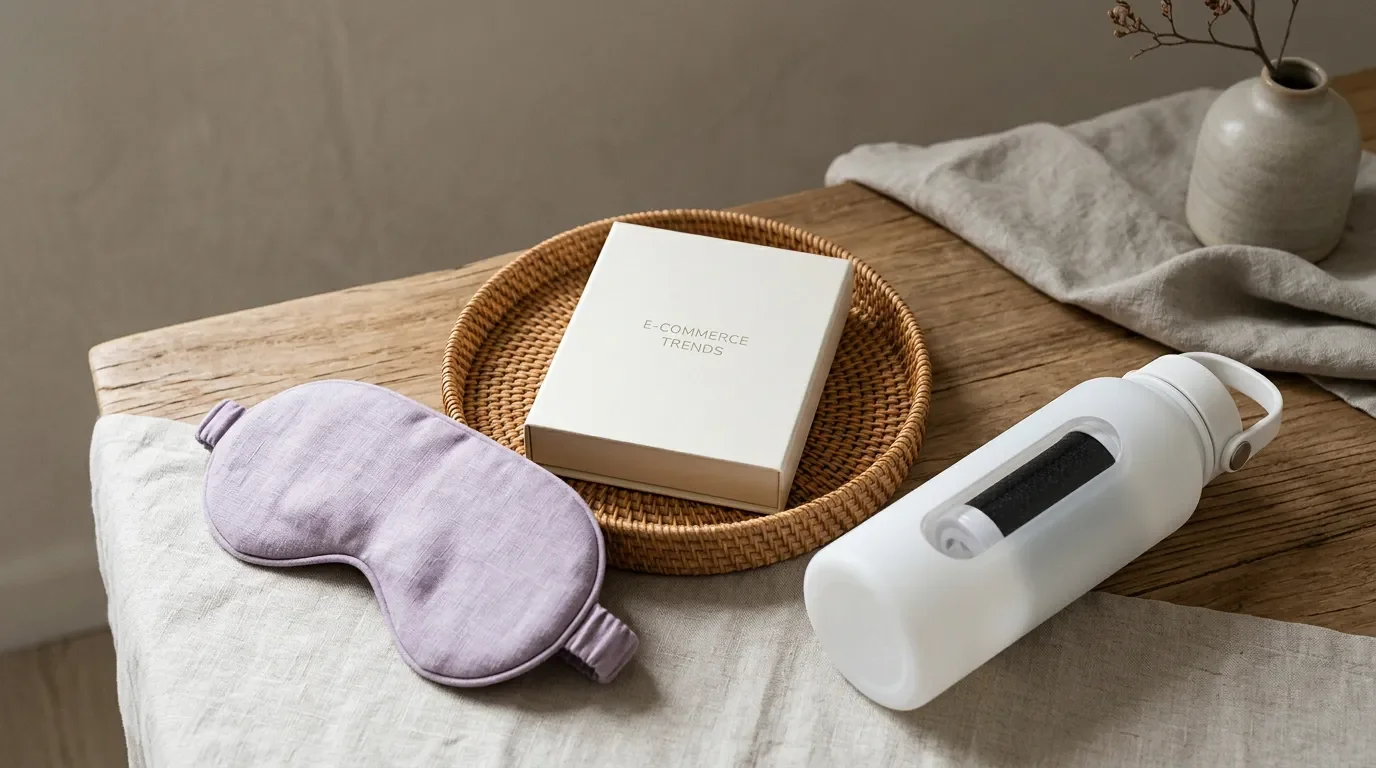
Sleep and recovery break out as DTC cold-start candidates — five categories with exploitable white space this week
Issue #5 surfaces five niche DTC cold-start categories from June 8–15: sleep optimization accessories (ShelfTrend's strongest Q2 signal, +44% listing growth, zero DTC bundle brand), portable filtered water bottles (subscription cartridge moat), kids' furniture small-SKU (4-month AliDropship cluster, Prime Day in 8 days), GLP-1 muscle preservation supplement bundle (4th consecutive confirmed white space), and LED smart vanity mirrors (8th consecutive AliDropship week, $100–150 tier still vacant). Titanium drinkware flagged as cooling and moved to watchlist-only.

June 15, 2026 · 10:34 PM
1 subscriptions · 5 items
Sleep and recovery break out as DTC cold-start candidates this week — five categories show exploitable white space with Prime Day eight days away.
Rating key
The ratings below apply consistently across all entries in this issue:
| Rating | Demand signal | Competition density | Cold-start readiness |
|---|---|---|---|
| ⭐⭐⭐⭐⭐ | Multi-source, 40%+ listing growth or 5+ week AliDropship recurrence | Zero dominant brand; fragmented or absent | Low MOQ, workable margin, clear acquisition channel |
| ⭐⭐⭐⭐ | Strong single-source with corroborating signals; 3–5 week recurrence | 1–2 known brands, no DTC-native position | Some friction (logistics, endorsement, regulatory copy) |
| ⭐⭐⭐ | Moderate signal; 2–3 week recurrence | Growing competition; quality variance high | Entry possible but narrower window |
| ⭐⭐ | Weak or single-source signal | Established brands present | High barrier; requires significant brand investment |
Quick-scan overview
| Category | Demand signal | Competition density | Cold-start rating | Status |
|---|---|---|---|---|
| Sleep optimization accessories | ⭐⭐⭐⭐⭐ | Low–medium (Manta Sleep + sub-niche gaps) | ⭐⭐⭐⭐⭐ | New this week |
| Portable filtered water bottles | ⭐⭐⭐⭐ | Low–medium (LifeStraw, GRAYL; no subscription DTC) | ⭐⭐⭐⭐ | New this week |
| Kids' furniture small-SKU | ⭐⭐⭐⭐ | Medium (large category, small-item sub-niches open) | ⭐⭐⭐⭐ | New this week |
| GLP-1 muscle preservation supplements | ⭐⭐⭐⭐ | Zero DTC brands — white space confirmed | ⭐⭐⭐⭐ | Recurring (week 4) |
| LED smart vanity mirrors ($100–150 tier) | ⭐⭐⭐ | Amazon clustered below $80; premium tier absent | ⭐⭐⭐ | Recurring (week 8) |
Sleep optimization accessories
Demand signal: ⭐⭐⭐⭐⭐ · Competition: Low–medium · Cold-start rating: ⭐⭐⭐⭐⭐
ShelfTrend's Q2 2026 emerging categories report ranks sleep optimization accessories as its strongest new signal across Amazon, eBay, Shopify, and TikTok Shop: listing growth of +44% over the past 90 days, with sell-through running 36% above the broader health and wellness category average. 1 Thirty-one percent of surveyed health-category sellers report sleep as their fastest-growing product area. 1
The category breaks into three sub-niches that each have distinct demand profiles and price ceilings:
- Weighted eye masks ($30–55): sensory-blocking with gram-count specified on packaging; converts well when weight is quantified in grams
- Sleep earbuds ($45–90): ultra-low-profile form factor for side sleepers; CNET published a "best sleep earphones 2026" roundup, confirming mainstream editorial attention
- Temperature-regulating pillowcases ($40–75): cooling or warming phase-change fabric; sold as single units or paired sets
Manta Sleep Mask (2M+ users globally) validates the demand ceiling for the weighted eye mask sub-niche, but Manta holds only the premium single-SKU position. ShelfTrend's analysis notes that products with quantifiable specifications — temperature grades, decibel ratings, exact gram weights — convert at materially higher rates than those with vague wellness claims. 1 A "sleep gift set" search cluster (eye mask + earbuds + pillowcase packaged as a bundle) shows unmet demand with no current DTC brand filling it. 1
Competition check: Manta Sleep Mask is the only identified brand with scale in the weighted eye mask segment. The sleep earbuds sub-niche has no standalone DTC brand — current options come from consumer electronics companies (Bose, Sony) not sleep-focused DTC brands. The temperature-regulating pillowcase segment has no confirmed DTC-native entrant.
Key risk: The "sleep as wellness" narrative is broad enough to attract larger health brands. The window is early but not permanent. A brand building specifically around gift bundles and TikTok "sleep routine" content has the best chance of locking in organic discovery before a bigger player enters.
Cold-start entry: Small rattan or linen-branded bundles (eye mask + earplugs + pillowcase) at $55–75 retail. All three components are AliExpress-sourceable with low MOQ (100–200 units per SKU). Estimated COGS on a bundle: $12–18, putting gross margin in the 72–84% range before shipping. TikTok Shop is the primary acquisition channel — "sleep routine" content with measurable product attributes (grams of weight, dB isolation rating) drives conversion more reliably than ambient wellness aesthetics.
Portable filtered water bottles
Demand signal: ⭐⭐⭐⭐ · Competition: Low–medium · Cold-start rating: ⭐⭐⭐⭐
ShelfTrend's Q2 2026 report places portable filtered water bottles as the second-strongest new signal in its emerging categories data: listing growth of +34% over 90 days, sell-through 28% above category average. 1 Nineteen percent of surveyed sellers in the category report receiving customer demand for filter cartridge replacements that they currently cannot fulfill — a supply-side gap that points directly to a subscription revenue model. 1
The underlying demand driver is water quality anxiety in urban US, UK, and Australian markets. LifeStraw Go and GRAYL Ultrapress are the recognized category benchmarks, but both are positioned as outdoor/adventure products — neither has a commuter-urban or home-office DTC identity. The gap is a $35–65 everyday carry water filter with a recurring cartridge subscription model.
TikTok Shop added subscription checkout in late 2024, meaningfully lowering the technical barrier for a small DTC brand to implement recurring cartridge orders without a custom Shopify subscription app. ShelfTrend's analysis identifies the bundle format (bottle + 3-month cartridge supply) as outperforming single-bottle listings on both margin and search ranking. 1
Competition check: LifeStraw Go and GRAYL Ultrapress occupy the outdoor-adventure tier. No DTC brand has claimed the everyday-carry or home-office filtered water position. Third-party lab certification on filter performance doubles conversion rates at the $35–65 price point. 1
Key risk: ShelfTrend is currently the sole source for the quantitative demand signal — secondary Serper validation showed review and editorial content rather than additional commercial trend data. The signal warrants action but also warrants a further validation check before committing to full inventory.
Cold-start entry: Launch with a bottle + 3-month cartridge starter kit at $49, then cartridge refill packs at $18–22 per 3-month supply. AliExpress carries compatible filtration cartridge stock. The subscription cartridge model is what separates this from a commodity water bottle listing — without recurring refills, there is no defensible position. Target content: side-by-side tap water TDS readings with vs. without the filter; lab certification graphic.
Kids' furniture small-SKU cold-start
Demand signal: ⭐⭐⭐⭐ · Competition: Medium · Cold-start rating: ⭐⭐⭐⭐
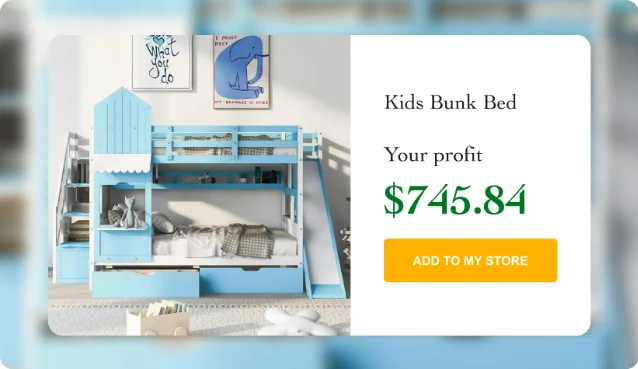
Kids' furniture has appeared on AliDropship's weekly bestseller list for four consecutive months in 2026, with five separate sub-category entries across that window: Kids Bunk Bed (June 10–16), Kids Bookshelf with Reading Nook (June 3–9), Montessori Floor Bed (May 27–June 2), Kids Reading Nook (March), and Wooden Play Kitchen Table (March). 2 This is the longest sustained category cluster in the current scan dataset.
The July back-to-school window adds a seasonal demand catalyst: Amazon Prime Day 2026 (June 23–26) explicitly includes back-to-school supplies as a primary deal category. 3 Father's Day falls June 21 — two days before Prime Day begins — adding a secondary gifting angle for the current week.
The cold-start divide in this category is structural. Large kids' furniture (bunk beds, full-size floor beds) carries high AOV but brings significant freight complexity, damage-in-transit risk, and assembly complaint rates. Those items are currently appropriate for dropshipping observation but not DTC cold-start. The viable entry points are:
- Kids' bookshelf + reading nook combos ($65–120): flat-pack, parcel-shippable, visually strong on Instagram and Pinterest
- Montessori-style low shelving units ($45–85): growing Montessori content community, aligns with educational parenting audience
- Wooden play kitchen accessories ($35–65 per accessory piece): small, light, high AOV via bundling
Competition check: The kids' furniture category overall is large and established. However, specifically within the reading-nook and Montessori-aligned sub-niches, no dominant DTC brand has been identified. Amazon search results in these sub-niches show fragmented generic sellers. Note: this signal is currently AliDropship-only — ShelfTrend's adjacent signal ("personalized children's learning tools") covers a related area but doesn't directly confirm kids' furniture demand velocity. Independent Amazon BSR validation is recommended before scaling.
Key risk: Single-source signal (AliDropship). Kids' furniture DTC has a moderate barrier from freight logistics — parcel-shippable SKUs are essential to cold-start viability.
Cold-start entry: Start with one flat-pack bookshelf or reading nook SKU at $75–110 retail. Source from AliExpress or directly from a furniture factory with MOQ under 100 units. Build the brand around educational-parenting content — Montessori philosophy, reading habit formation. The Prime Day timing makes the next 8 days a useful window for testing Amazon ad performance at lower CPCs before the Prime Day surge.
GLP-1 muscle preservation supplements
Demand signal: ⭐⭐⭐⭐ · Competition: Zero DTC brands · Cold-start rating: ⭐⭐⭐⭐
For the fourth consecutive week, no DTC brand offering a creatine + leucine supplement bundle explicitly positioned for GLP-1 drug users has been found in any search path. The one notable development this week: Plexus Worldwide launched a "GLP-1 Support System" — a multi-level marketing product line, not a standalone DTC brand, and not positioned around muscle preservation. It does not close the white space.
Novo Nordisk's oral semaglutide had crossed 2 million total prescriptions since launch as of investor materials published this quarter, expanding the addressable user base. The gap remains: GLP-1 users losing muscle mass during rapid weight loss have creatine monohydrate and leucine as the two most-discussed compounds in the relevant Reddit communities (r/Semaglutide, r/GLP1), but no single DTC brand has organized these ingredients under a GLP-1 muscle preservation identity.
Competition check: The product landscape falls into two non-overlapping buckets. General fitness supplements — Transparent Labs Creatine HMB, MuscleTech Leucine Peptide 185 — are not GLP-1 positioned. GLP-1 weight-management supplements — Nutrex BURN30 GLP-1+, Vitamin Shoppe's GLP-1 Support Protein — target appetite suppression and fat loss, not muscle preservation. No brand bridges both.
Key risk: An established supplement brand (Momentous, Thorne, Ritual) could enter this positioning with a single product launch and immediately outcompete a new DTC entry on credibility. The window closes the day any of them publish a "creatine for GLP-1 users" SKU. Four weeks of confirmed white space is meaningful but not indefinite.
Cold-start entry: Private-label creatine monohydrate + leucine + electrolyte blend available from US and China-based supplement contract manufacturers at MOQ under 500 units. FTC compliance requires positioning as "muscle support during caloric restriction" — standard supplement copy practice that avoids referencing GLP-1 drug names directly. Estimated retail: $38–55 per 30-day supply. The educational content path is open: r/Semaglutide and r/GLP1 have consistent creatine and leucine discussion threads with no brand repeatedly named.
LED smart vanity mirrors ($100–150 DTC tier)
Demand signal: ⭐⭐⭐ · Competition: Amazon sub-$80 clustered; premium tier absent · Cold-start rating: ⭐⭐⭐
LED Lighted Vanity Mirror appeared on AliDropship's June 10–16 bestseller list — the eighth consecutive week of LED or smart mirror variants appearing on the list. 2 The prior two weeks featured the 18-Inch Smart Vanity Mirror (June 3–9) and Modern LED Smart Mirror (May 27–June 2). All AliDropship variants are generic and unbranded.
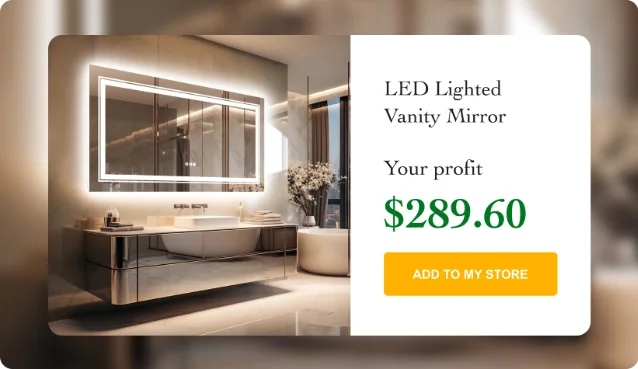
Amazon competition for LED vanity mirrors remains clustered below $80 — this is the generic dropshipper range. Eurolux LED Bathroom Mirrors has Instagram ad presence but focuses on bathroom/commercial applications rather than the personal vanity segment. The $100–150 DTC premium tier — defined by branded aesthetics, dedicated beauty content, and higher-quality light temperature controls — has no incumbent.
Competition check: Amazon sub-$80 generic segment: crowded, price-compressed, commoditized. $100–150 branded DTC segment: no identified entrant across 8 weeks of monitoring. The structural gap is real, but it requires brand investment — a commodity LED mirror listing at $130 will not sell; only a brand with a beauty identity, a defined customer persona (makeup artists, content creators, skincare enthusiasts), and creative direction can hold that tier.
Key risk: Eight consecutive weeks of dropshipper demand does not automatically translate to DTC brand demand at a 2× price premium. A premium tier entry requires customer development before inventory commitment. The category signal is strong; the brand-building lift required is higher than the other entries this week.
Cold-start entry: Begin with a lead magnet content play (vanity setup tutorials, lighting-for-makeup content, comparison of light temperature settings) to build an email list before placing a first order. MOQ for custom-branded LED mirrors from Chinese manufacturers: typically 50–100 units. Retail at $120–145. COGS range $35–55 depending on size and light quality specification.
Watchlist status: condensed updates
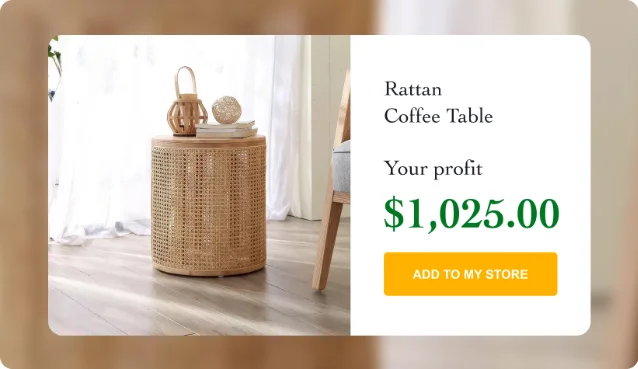
Rattan/boho home organizers — 7th consecutive week. The Rattan Coffee Table appeared again on the June 10–16 AliDropship list, extending the category's run to seven straight weeks and making it the single most persistent signal in this dataset. 2 No dedicated DTC rattan brand was identified this week. An IndexBox outdoor furniture market report confirms that boho-chic and minimalist styles are driving purchase decisions, with DTC growth specifically mentioned. Entry guidance from Issue #4 (small rattan organizers at $25–45 retail, aesthetic-led DTC positioning) remains valid.
Titanium drinkware — signal cooling. Titanium drinkware is absent from the June 10–16 AliDropship list — its first absence after a 5-week run. 2 No DTC brand launch has been detected in associated search paths. This does not invalidate the long-term material-differentiation thesis, but the near-term dropshipper signal has cooled. Watching for recurrence; not a recommended cold-start entry for this week.
HAP remineralizing gum — stable at 10 brands. The Chewing Gum Reviews "Top 10 Best Remineralizing Gums 2026" ranking was last updated January 23, 2026 and remains unchanged. 4 Underbrush holds #1 (nano-HA + xylitol, natural mastic base); Enamio holds #2. Only two of ten brands offer nano-hydroxyapatite formulations. No new US-native quality DTC entrant was detected this week. The opportunity for a clean nano-HA product at $18–28 remains open but competition is no longer sparse.
Next watch
The Prime Day window opening June 23 is the primary catalyst to monitor across all five categories this week. Back-to-school demand (Prime Day's stated focus category) will pull kids' furniture small-SKU traffic earlier than the traditional late-July back-to-school peak. 3 Sleep accessories and water bottles both index against health and wellness, which accounted for 26% of Prime Day purchasing in 2025 5 — watch for category-level listing velocity changes in the 48 hours post-Prime Day as a signal of which sub-niches saw real conversion. The GLP-1 white space is at maximum urgency: four weeks of confirmed open space is unusual; if no entry appears by week five, expect a larger supplement brand to move first rather than the window staying open indefinitely.
Cover image: AI-generated.
Add more perspectives or context around this Post.